




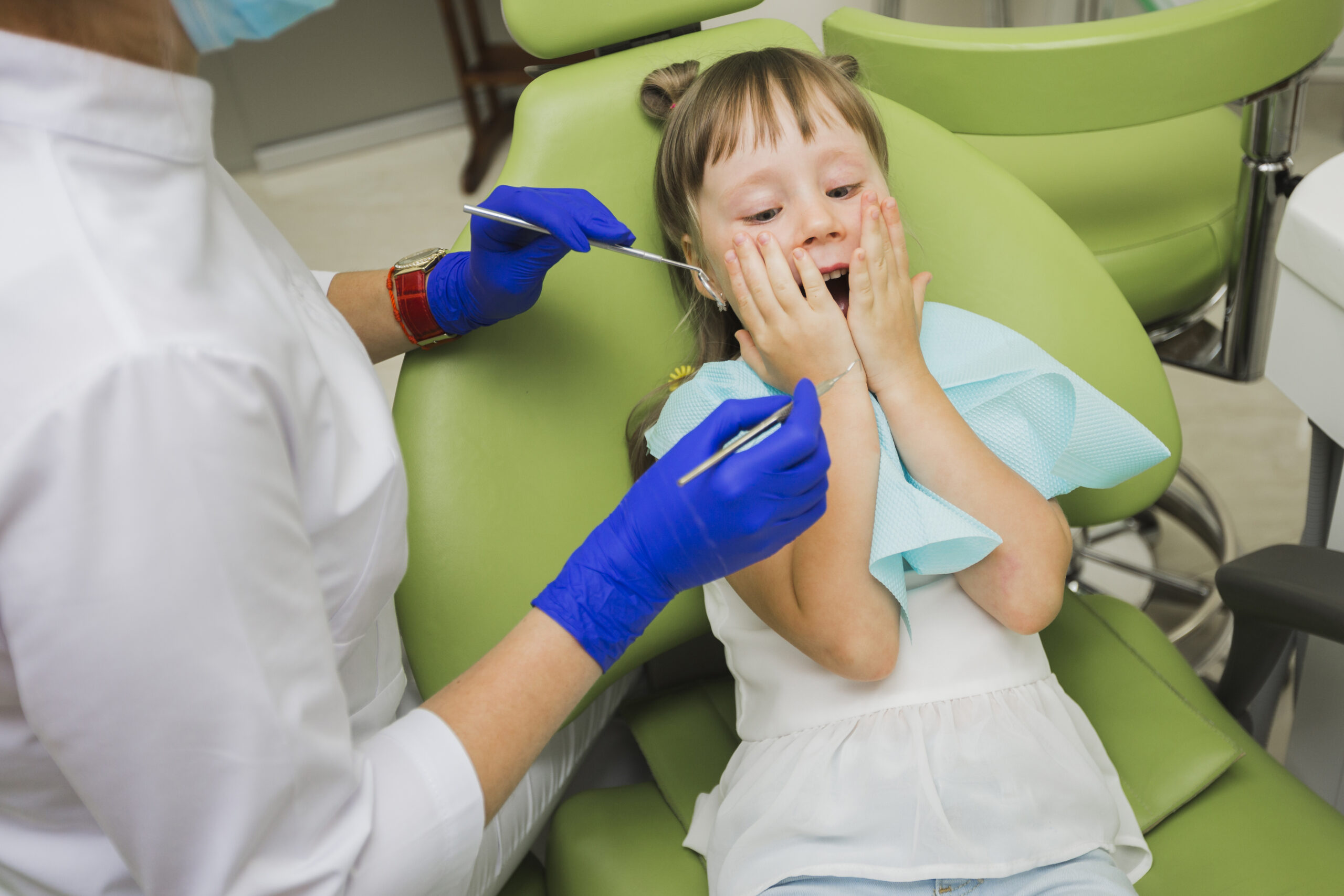
What Is Dental Fear in Children
Dental fear in children refers to anxiety or nervousness before or during dental visits. It is common and can arise from unfamiliar surroundings, sounds of dental instruments, or fear of pain. For some children, even the idea of sitting in a dental chair can cause distress.
This fear, if not managed properly, can lead to avoidance of dental care, resulting in cavities, gum disease, and other oral issues. Pediatric dentistry focuses not only on treating dental problems but also on helping children feel comfortable and confident during their visits.
Why It Happens
Children’s fear of the dentist often comes from:
- Past negative experiences: Painful or rushed treatments in the past can make a child anxious.
- Fear of the unknown: New environments, strange instruments, and bright lights can be overwhelming.
- Parental influence: If parents express fear or anxiety about dental visits, children may imitate those feelings.
- Stories or media: Hearing scary stories or seeing exaggerated portrayals of dentists can cause unnecessary fear.
- Lack of understanding: Young children may not know why they need treatment, which can make them uneasy.
Uses of Managing Dental Fear
Managing dental fear is crucial for:
- Ensuring Regular Dental Visits: When children are calm, they are more likely to visit the dentist routinely.
- Promoting Preventive Care: Comfortable children cooperate better during cleanings, checkups, and fluoride treatments.
- Encouraging Positive Habits: Early positive experiences help children carry good dental attitudes into adulthood.
- Improving Treatment Success: Relaxed children allow for smoother, quicker, and more effective procedures.
- Building Trust: Trust between dentist, child, and parent leads to better communication and lifelong comfort.
Benefits
- Reduced Anxiety: Children become more confident with each positive visit.
- Better Oral Health: Regular visits prevent cavities and gum disease.
- Improved Cooperation: Calm children make dental procedures faster and easier.
- Long-Term Comfort: Early exposure builds lasting trust in dental care.
- Healthier Smiles: Fear-free children maintain better oral hygiene at home.
Precautions
Parents can help manage dental fear by:
- Introducing dental visits early—preferably when the first tooth erupts or by the first birthday.
- Avoiding using the dentist as a threat or punishment in conversation.
- Using positive language like “cleaning” and “checking” instead of “pain” or “injection.”
- Reading children’s books or showing videos about friendly dental visits.
- Staying calm during appointments, as children easily sense parental emotions.
Dentists can also make a big difference through gentle communication, child-friendly explanations, and behavior management techniques.
Myths About Dental Fear in Children
- “All children are afraid of the dentist.”
Not true. Many children enjoy their visits when introduced in a positive environment. - “Dental fear is a phase that will pass on its own.”
Without proper management, it can persist into adulthood and cause lifelong avoidance of dental care. - “Distraction is enough to handle fear.”
While distractions help, trust-building and reassurance are equally important. - “Parents should stay out of the treatment room.”
In many cases, a calm parent’s presence can reassure the child and ease anxiety. - “Sedation is the only way to manage dental fear.”
Most children can overcome fear through gentle communication, positive reinforcement, and gradual exposure.
Conclusion
Managing dental fear in children is about creating positive, trust-filled experiences that shape their attitude toward oral health for life. When handled with patience and care, even the most anxious child can become comfortable and cooperative during dental visits.
At Tiny Pearls Dental Care, we specialize in child-centred dental care that prioritizes comfort, education, and gentle communication. Our goal is to make every visit a happy and memorable one, helping children grow with strong, fearless smiles.
